Once the permits are approved and the equipment is on order, a commercial EV charging project becomes a construction job that has to happen in a specific order. You cannot pour a pad before you trench, you cannot pull wire before the conduit is in, and you cannot bury an open trench until an inspector has looked at it. Getting that order right, and understanding where inspections force the work to stop and wait, is the difference between a clean two-to-four-week field schedule and one that stalls because two trades showed up in the wrong sequence or a fresh strip of asphalt has to be cut open again. This article walks through the field sequence step by step, marks the inspection hold points that gate it, and explains the change orders that come out of the ground.
This is the construction-management view. For how civil work fits into the overall cost and scope, see what commercial installation involves. For how long each phase takes, see realistic timelines and delays. This article is about the order of operations and the field coordination, not the dollars or the calendar.
The sequence, in the order it actually happens
Every commercial EV charging build, whether it is four Level 2 ports on a surface lot or a bank of DC fast chargers behind a new switchboard, runs through the same backbone of steps. The duration of each step changes with scale and site, but the order does not, because each step depends physically on the one before it.
- Mobilization and site protection. The crew stages a work area, sets up fencing and traffic control, protects existing landscaping and drainage, and confirms the utility locates are marked on the ground before anyone breaks pavement.
- Underground and civil work. Saw-cut the pavement along the planned route, excavate the trench, lay conduit and set pull boxes, and form and pour the equipment pads or foundations.
- Set the equipment. Place the switchboard, any sub-panels or load-management gear, and the charger units on their pads or mounts.
- Electrical rough-in and wire pull. Pull conductors through the conduit, land raceways, and set boxes and supports.
- Terminations. Make the connections at the panel, the gear, and each charger, torqued to specification.
- Backfill and surface restoration. After the underground inspection passes, compact the backfill, repave or repour the surface, restripe the spaces, and install signage and bollards.
- Staged inspections at the hold points. These do not happen at the end. They are interleaved through the steps above, and each one can stop work until it passes (see the next section).
- Utility meter set. The utility installs the meter once its own requirements are satisfied.
- Energization and commissioning. Power up, configure the network, and run end-to-end testing.
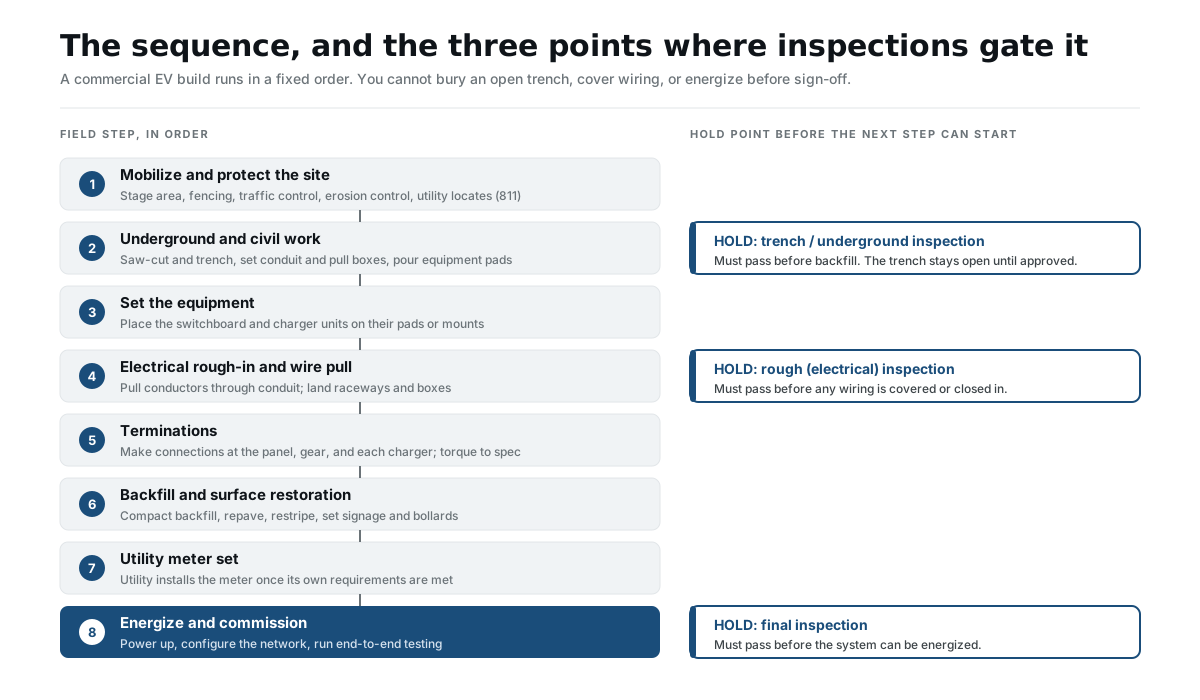
The single most useful thing to understand about this list is that the slow part of a commercial EV project is almost never the field work itself. The field work is the short phase. What stretches it is waiting: waiting for an inspector at a hold point, waiting for the utility to set a meter, waiting for a change order to be priced after the trench finds rock. The sequence is fast when nothing interrupts it. The job of good construction management is to keep the interruptions from stacking up.
The inspection hold points, and why they gate the schedule
A "hold point" is a place in the sequence where the work physically cannot continue until the authority having jurisdiction (the local building or electrical inspector, often called the AHJ) has inspected and approved what was done. Miss the timing on one of these and the crew stands down, because the next step would cover up the very thing the inspector needs to see. There are three that matter on almost every commercial EV build.
The underground or trench inspection, before backfill. This is the one that catches people. The inspector has to see the conduit in an open trench: the burial depth, the conduit type and condition, the warning tape, and the backfill material staged nearby. You cannot bury it first and explain it later. Minimum cover depends on the wiring method: under the National Electrical Code (NEC Table 300.5, renumbered Table 305.15 in the 2023 edition), PVC conduit listed for direct burial, the usual choice on these jobs, commonly needs 18 inches of cover in general locations and 24 inches under streets, roads, and parking lots, and direct-burial cable, if used, is deeper. The inspector verifies that depth with the trench open. Because the depth can only be confirmed while the trench is open, the rule on every commercial site is the same: do not cover the underground installation until the inspector has signed off. If the crew backfills before the inspection, the likely outcome is digging it back up.
The rough inspection, before cover. After the conduit, boxes, and conductors are in place but before anything is closed in or concealed, the rough (sometimes "rough-in") electrical inspection confirms the wiring methods, box fill, supports, and grounding. The principle is identical to the trench: nothing gets covered until it is approved, because once it is behind a wall, in a column, or under a slab, the inspector cannot see it.
The final inspection, before energization. The system cannot be legally energized until the final inspection passes. This confirms the completed installation, the terminations, the equipment listing and clearances, and labeling. Only after the final sign-off does the system get turned on.
These three create a simple discipline. You sequence the work so that the trench is ready for the inspector before you plan to backfill, the rough is ready before you plan to cover, and everything is complete before you plan to energize. The mistake that wastes the most time is treating inspections as a formality at the end rather than as gates inside the sequence, then losing days because an inspector is booked out and a whole crew is waiting on a single sign-off.
How the trades hand off
A commercial EV build almost always involves at least three parties in the field: a general contractor (GC) or a charging contractor acting as the prime, a licensed electrical contractor, and a civil or sitework subcontractor. The handoffs between them are where sequencing succeeds or fails.
| Trade | Owns | Hands off to | The coordination risk |
|---|
| GC / prime contractor | Schedule, site logistics, inspections, the critical path | Everyone | One party must own the sequence; if no one does, trades collide |
| Civil / sitework sub | Saw-cutting, trenching, pads, backfill, paving, striping | Electrical (open trench), then back for restoration | Returning to repave after electrical is the most common re-mobilization |
| Electrical contractor | Conduit, pull boxes, gear, wire, terminations, energization | Civil (for backfill and restoration), utility (for the meter) | Wire and terminations cannot start until conduit and gear are set |
The non-negotiable rule that comes out of this table: get the conduit in the ground before the paving and final surface go down. Underground conduit, pull boxes, and stub-ups all have to be in place, inspected, and backfilled before the lot is repaved and restriped. Sequence it the other way, lay fresh asphalt and then realize a conduit run was missed, and the civil sub has to saw-cut and patch brand-new pavement, which is both a visible scar and a cost nobody budgeted. This is exactly the hazard flagged when a proposal scopes civil and electrical separately with a "we'll figure out civil after electrical" attitude. On a well-run job, the electrical contractor's conduit layout is coordinated with the civil sub's trenching and paving plan before either one mobilizes, so the trench is dug once, the conduit goes in once, and the surface is restored once.
The handoff also runs to the utility. The electrical contractor builds to the point where the utility can set the meter, but the utility controls when that happens and on its own schedule. Build the meter set into the sequence as an external dependency you do not control, the same way you treat the interconnection timeline in realistic timelines and delays.
The civil work in detail: trench, conduit, pad, restore
For a surface-lot install, civil work is the visible heart of the project. It runs in a tight internal sequence of its own.
- Saw-cut and excavate. The pavement is saw-cut cleanly along the planned conduit route so the patch later has straight edges, then the trench is excavated to the depth the cover requirement demands plus the conduit diameter and bedding.
- Bed and lay conduit, set pull boxes. Conduit is laid on a sand or approved bedding layer, joined and supported, with pull boxes (and handholes or vaults on longer or multi-run paths) set at intervals so the wire can actually be pulled. Warning tape goes in above the conduit during backfill where the code edition or the AHJ requires it.
- Form and pour pads and foundations. Chargers on pedestals, and the switchboard or service equipment, sit on concrete pads or footings sized and reinforced for the equipment and usually ringed with bollards for vehicle protection.
- Inspect, then backfill. The trench inspection happens here, with the trench open. Only after it passes is the trench backfilled and compacted in lifts.
- Restore the surface. Repave or repour the cut, then restripe the spaces, install signage, and set bollards and wheel stops. The accessible spaces and the accessible route are restored exactly as the approved plan shows them.
Two safety and code points shape how this work is run, and both are worth knowing as the owner because they affect schedule and the look of the finished lot.
First, utility locating is a legal step, not a courtesy. Federal excavation rules (OSHA 29 CFR 1926.651(b)) require that the estimated location of existing underground utilities be determined before opening an excavation, and that the utility owners be contacted and asked to mark their lines before digging starts. In practice that means a one-call request through the national 811 system, and the locators mark the ground using the standard APWA color code. On a commercial site it is common to go further and hire a private locator to find utilities the public locate does not cover, which leads directly into the change-order discussion below.
Second, trench safety governs how the trench is dug and how long it stays open. Under OSHA's excavation standard (29 CFR 1926 Subpart P), a trench five feet or deeper generally needs a protective system (sloping, shoring, or a trench box) unless it is in stable rock, and a trench twenty feet or deeper needs a protective system designed by a registered professional engineer. A competent person must inspect the trench daily before anyone enters it, and excavated spoil has to be kept back from the edge, at least two feet, so it cannot fall back in. These requirements are not paperwork; they affect the footprint of the work zone, how the spoil is staged, and whether the trench can be left open overnight while waiting on an inspector. The conduit run itself, how far it goes and how complex it is, is what you size in the electrical infrastructure assessment; this is about how that run gets safely into the ground.
What triggers change orders: it comes out of the ground
If a commercial EV project blows its budget during construction, the cause is usually a site condition that nobody could price because nobody had seen it yet. Unforeseen and undisclosed conditions dominate change orders on civil-heavy work, and they cluster into a short list.
- Rock or hardpan. Trenching that assumed ordinary soil hits rock and slows to a crawl or needs a different machine, rock saw, or hammer. Cost and time both jump.
- High groundwater. The trench fills with water and has to be dewatered with pumps before work can continue, and the bedding and backfill approach may have to change.
- Unmarked or mislocated existing utilities. A water, gas, sewer, or communications line that is not on any plan, or is not where the plan shows it, is struck or nearly struck. Work stops, the conduit route may have to move, and in the worst case there is damage to repair.
- Contaminated soil. Spoil turns out to need testing, special handling, and licensed disposal rather than being hauled off as clean fill, which is both a cost and a schedule hit.
- Unsuitable subgrade. The soil under a planned pad or under the pavement is too weak to support it and has to be over-excavated and replaced with engineered fill before the pad can be poured.
- Design conflicts. The drawings meet something in the field they did not anticipate, an existing footing, a slope, a drainage structure, and the design has to be adjusted on the fly.
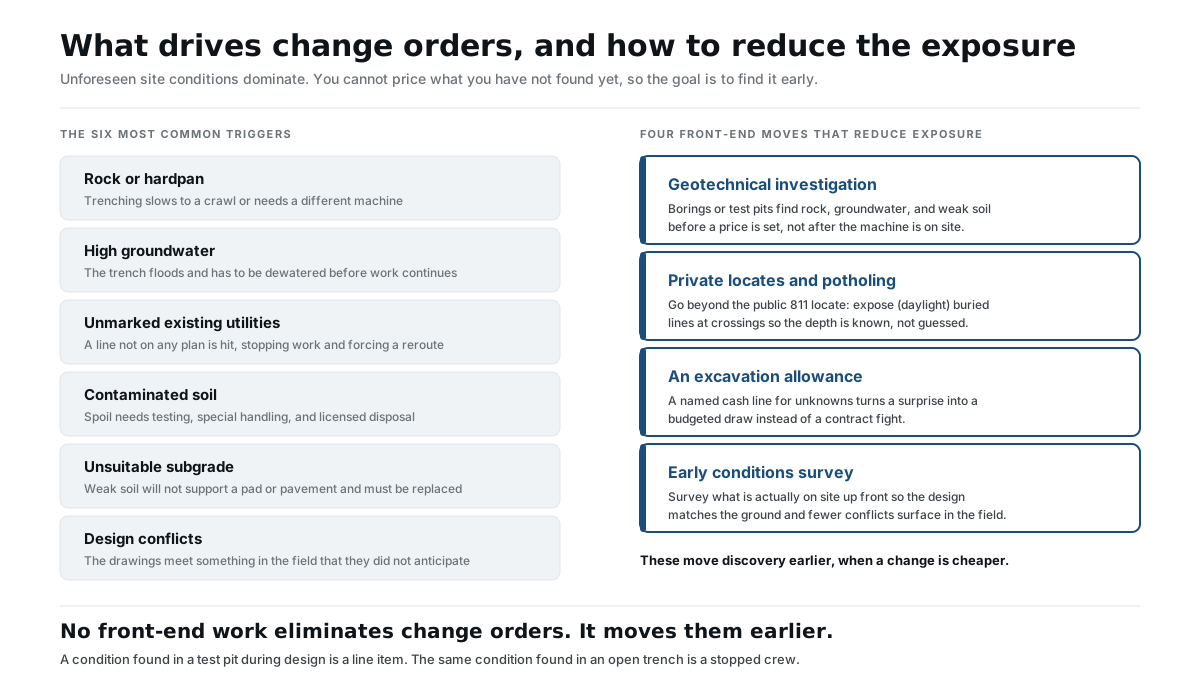
You cannot make these risks disappear, because the ground is the ground. What you can do is move the discovery earlier, when a change is a line item in the design rather than a stopped crew on a billable day. Four front-end moves do most of that work:
- A geotechnical investigation. Borings or test pits before the price is locked tell you whether rock, groundwater, or weak subgrade is in play, so the trenching and pad design account for it instead of discovering it.
- Private utility locating and potholing. Go beyond the public 811 locate. Potholing (also called daylighting, often with a vacuum-excavation truck) physically exposes buried lines at the crossings, so the conduit route is designed around a known depth rather than a guess.
- An excavation allowance in the contract. A named cash allowance for excavation unknowns turns a surprise into a budgeted draw. It does not lower the odds of hitting rock, but it removes the contract fight when you do.
- An early existing-conditions survey. Surveying what is actually on the site up front, and designing to it, is what keeps the drawings from meeting surprises in the field.
The point for an owner is simple: a condition found in a test pit during design is cheap to deal with. The identical condition found in an open trench, with a crew standing by and the schedule on hold, is expensive. The front-end spend is not overhead, it is how you buy down the change-order risk on the part of the job you control least.
Weather, site access, and the ADA route
Two more field realities shape the sequence.
Weather and site access. Civil work is exposed to weather in a way that finish electrical work is not. Saw-cutting, trenching, pouring concrete, and paving all have temperature and moisture constraints, and a flooded or frozen trench does not get backfilled on schedule. Site access matters too: on an operating property, the work zone has to coexist with tenants, customers, and traffic, which often means phasing the work, keeping drive aisles open, and staging materials where they do not block the business. Build weather contingency and access phasing into the plan rather than assuming clear days and an empty lot. These are the kinds of constraints you ideally surface during site selection fundamentals, not on the first day of trenching.
The ADA accessible route and spaces. Accessibility is not a finishing touch applied at striping. The accessible EV charging space, its access aisle, and the accessible route connecting it to the building entrance all have to be built per the approved plan, with the right dimensions, slopes, and surfaces. The U.S. Access Board's proposed accessibility guidelines for EV charging stations (the September 2024 NPRM under the ADA and ABA, which is proposed and not yet binding federally) describe accessible charging spaces, access aisles, an accessible route from the charging space to the facility, and reachable, operable charger controls. Because the route, slopes, and clear floor space are physical site features, they are set during the civil and restoration work, not added later, and the inspector confirms them against the plan. Which permits and accessibility reviews apply to your project is covered in building codes and zoning; the construction-management point here is simply that the accessible route is part of the build sequence, poured and graded to the plan, not a coat of paint at the end.
Worked example: a surface lot versus a parking structure
The same backbone sequence plays out very differently depending on where the chargers go. Two contrasting cases make the coordination concrete.
Case 1: eight Level 2 ports on a surface lot, panel 220 feet away. The civil scope dominates. The crew mobilizes, confirms the 811 locates are marked, and saw-cuts a clean line across the lot from the electrical room to the charger islands. They trench the run to 24 inches of cover (it is under a parking lot), bed and lay the conduit, set pull boxes at the pull-point intervals, and form and pour the charger pads and bollard footings. Here is the hold point that governs the whole job: the trench is left open for the underground inspection. Nothing gets buried until the inspector confirms depth, conduit, and tape. If that inspection is scheduled for Tuesday and the inspector is booked until Friday, the open trench, with its protective system and spoil set back two feet, sits open for three more days, fenced and safe but holding up backfill, paving, and everything downstream. Once it passes, the electrical contractor pulls wire, the rough inspection clears the above-grade work, terminations are made, and only then does the civil sub come back to backfill, compact, repave the cut, restripe the spaces (including the accessible space and its access aisle), and set signage and bollards. Final inspection, meter set, energize. The lesson: on a surface lot, the open-trench hold point is the pivot the whole schedule turns on, and the worst outcome is repaving before the conduit is confirmed in and inspected.
Case 2: the same eight ports inside an existing parking structure. The trenching problem mostly goes away, and a different set of constraints takes its place. Conduit is more often run on the surface of the deck or along structural members and columns rather than buried, so the "open trench before backfill" hold point may be light or absent. But the rough inspection before any conduit is concealed in a column chase or above a deck still applies, low overhead clearances and tight columns make the physical wire pull harder, core drilling between levels has its own structural review, and ventilation, fire, and life-safety coordination enter the picture in a way they do not on an open lot. Site access is tighter because you are working inside an occupied structure with live traffic on the other levels. The civil work shrinks; the coordination and the above-grade inspections grow. The sequence is the same backbone, but the hold point that bites is different.
The takeaway across both cases: identify which hold point governs your specific site early, and sequence the trades so you arrive at that hold point ready, with the inspection scheduled, rather than discovering at the last minute that a crew is idle waiting on a sign-off or that fresh pavement has to be cut back open.
The bottom line
A commercial EV charging install is a sequenced construction job. The order is fixed by physics and by code: protect the site, do the underground and civil work, set the equipment, rough-in and pull wire, terminate, backfill and restore, set the meter, and energize. Three inspection hold points gate that order, and the trench inspection before backfill is the one that most often surprises owners, because an open trench cannot be buried until it passes. The field work is the fast part. What stretches the schedule is waiting at the hold points, waiting on the utility meter, and pricing the change orders that come out of the ground. Sequence the conduit before the paving so you never cut a fresh lot open, treat the inspections as gates inside the work rather than a formality at the end, and spend on the front-end investigation that moves site-condition discovery from the open trench back to the design table. That is most of what good construction management on these projects comes down to.
Last factually verified: 2026-06-19 against the OSHA excavation standard 29 CFR 1926 Subpart P (1926.651 specific excavation requirements, including 1926.651(b) underground installations and 1926.651(j)(2) spoil protection, and 1926.652 protective system thresholds) on osha.gov, the National Electrical Code Table 300.5 minimum cover requirements and Article 625 EV charging continuous-load treatment, the national 811 / "Call Before You Dig" one-call system and APWA uniform color code, and the U.S. Access Board's September 2024 notice of proposed rulemaking on ADA/ABA accessibility guidelines for EV charging stations (access-board.gov; Federal Register, 2024-09-03).